Secure Your Event: Hire Expert First Aid Event Staff Today
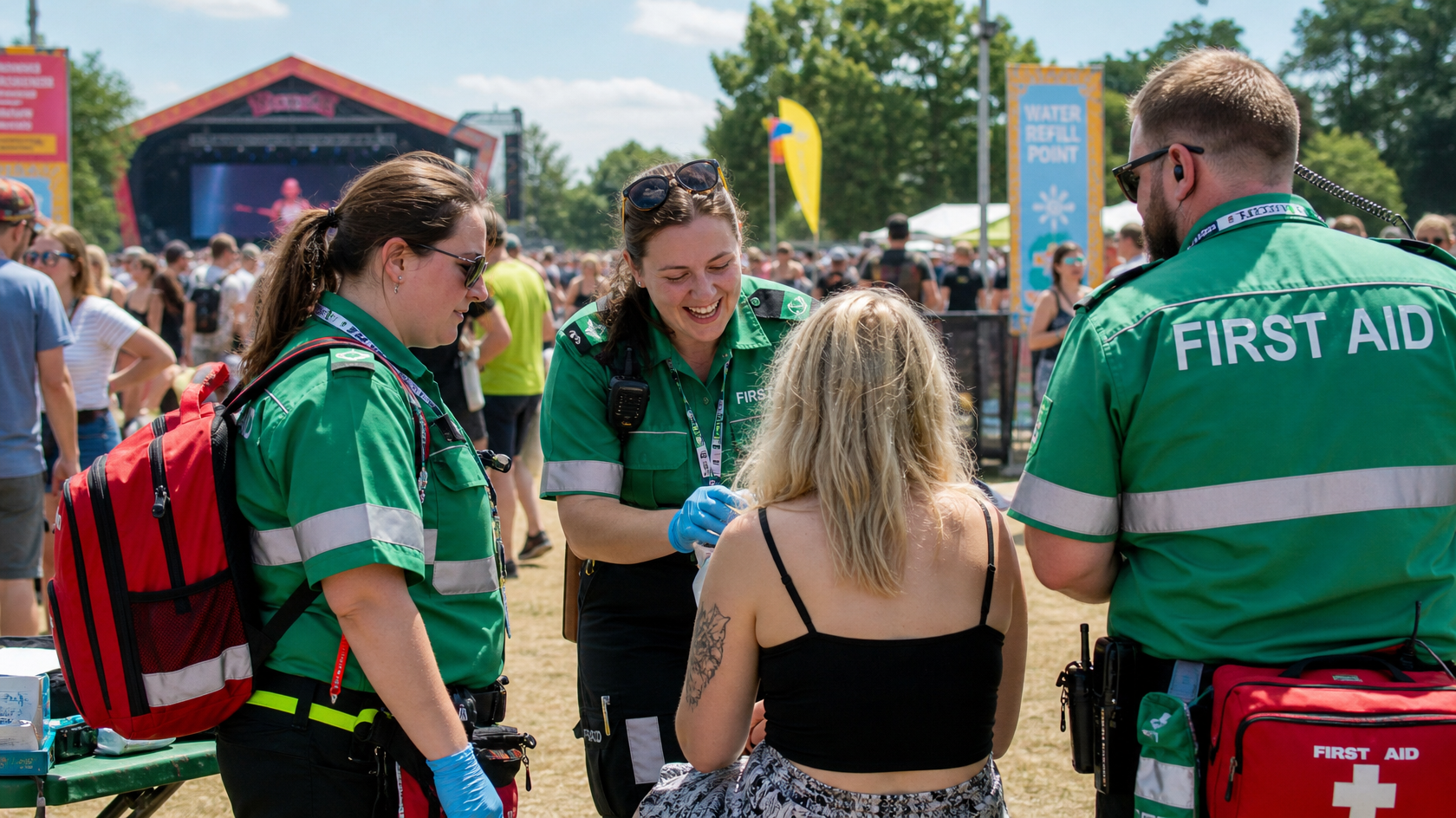
Comprehensive, certified medical personnel for concerts, festivals, corporate events, and sports. Ensure attendee safety with rapid-response professionals.
The Critical Role of First Aid Event Staff
In the high-stakes environment of live events, from sprawling music festivals to intimate corporate gatherings, the presence of qualified First Aid Event Staff is not just a regulatory checkbox—it's a fundamental pillar of attendee safety and event integrity. These professionals are the frontline guardians, trained to assess, stabilize, and manage medical incidents ranging from minor cuts and heat exhaustion to cardiac events and mass-casualty scenarios. Their expertise transforms a potential crisis into a managed incident, protecting both the public and the event's reputation.
Partnering with a specialized staffing agency ensures you don't just fill a role; you secure a resilient safety net. Unlike general event staff, these individuals hold certifications like First Aid at Work (FAW), Emergency First Aid at Work (EFAW), Paediatric First Aid, and often more advanced qualifications like Event Medical Technician or even Paramedic status. Their hiring requires a nuanced approach, blending swift recruitment with rigorous vetting—a process where a dedicated agency excels, much like sourcing specialized light industrial staff or reliable warehouse operatives for time-sensitive projects.
Pro-Tip: Beyond the Certificate
A valid first aid certificate is the baseline. For event-specific roles, prioritize staff with proven experience in crowded, noisy, and high-pressure environments. Look for candidates who have worked at similar-scale events and can demonstrate calm decision-making under duress.
Your Complete Guide to First Aid Event Staffing
Explore the different facets of building and managing your event medical team. Use the tabs below to navigate.
Defining the Event Medical Team Hierarchy
A robust first aid team is structured like a medical command unit. It's not a group of individuals but an integrated system.
-
First Aid Lead / Medical Coordinator
The operational commander. This person liaises with event control, emergency services, oversees triage, manages the team roster, and ensures all equipment and medications are accounted for. They often hold Paramedic or Advanced First Aid qualifications.
-
Treatment Centre Staff
Stationed at the main first aid post or field hospital. They handle more serious injuries, provide rest and rehydration, maintain patient records, and prepare patients for handover to ambulances. Requires strong clinical skills and calm demeanor.
-
Roving Patrol Teams
The mobile response unit. Equipped with response bags, AEDs, and radios, they patrol crowded areas, respond to initial incident calls, perform on-spot assessments, and initiate casualty evacuation. Fitness and excellent crowd navigation are key.
-
Crowd Doctor (For Large Events)
A registered medical practitioner (GP or A&E doctor) on-site to make critical clinical decisions, prescribe medication if necessary, and provide a higher level of medical authority. Essential for festivals with tens of thousands of attendees.
A Strategic Blueprint for Hiring First Aid Event Staff
Securing the right team is a multi-stage process that balances speed with due diligence. For many event managers, leveraging an agency with a deep talent pool is the most efficient path, similar to how businesses use an Exam Invigilator Agency for secure, vetted academic personnel.
Needs Assessment & Briefing
Define attendee numbers, event type (sports vs. concert), duration, special risks (water, height, alcohol), and required staff-to-attendee ratios. A detailed brief is the foundation of a successful hire.
Sourcing & Vetting
Agencies pre-vet for certifications (checking validity with awarding bodies), right-to-work, DBS checks, and reference history. They assess practical experience and interpersonal skills crucial for event environments.
Placement & Onboarding
Successful candidates receive event-specific onboarding: site maps, communication protocols, chain of command, and key contact information. This ensures they are integrated, not just present.
This structured approach mirrors best practices in other temporary sectors. Just as you would for urgent temp hires in Brighton or last-minute placements for logistics, planning and partner selection are everything.
Optimizing On-Site Performance and Coordination
Once your First Aid Event Staff are on-site, effective management ensures they operate as a cohesive, efficient unit. This involves clear communication systems, logistical support, and well-defined operational procedures.
- ✓Dedicated Communication Channel: Equip all first aid staff with reliable radios (UHF/VHF) on a dedicated, encrypted channel separate from general event security. This prevents channel congestion during critical incidents.
- ✓Staggered Breaks & Rotations: Medical staff cannot be effective if fatigued. Implement a rotation schedule that keeps the treatment centre fully manned while allowing patrols to rest, hydrate, and debrief.
- ✓Clear Triage and Handover Protocols: Establish and drill a simple triage system (e.g., Priority 1-3) and a standardized handover sheet for ambulance crews. This saves vital minutes and improves patient outcomes.
- ✓Regular Situation Reports (SITREPs): The First Aid Lead should provide scheduled updates to Event Control on incident numbers, resource status, and any emerging health trends (e.g., heat-related illness spike).
Effective on-site management is akin to running a complex logistics operation or a high-volume events & promotions team—it requires foresight, real-time adaptability, and clear leadership.
Navigating the Legal and Insurance Landscape
Failure to comply with health and safety legislation can result in severe financial penalties, civil liability, and reputational damage. Your First Aid Event Staff are central to your compliance strategy.
Key Legal Obligations:
- The Health and Safety (First-Aid) Regulations 1981: Require employers to provide adequate and appropriate equipment, facilities, and personnel.
- The Management of Health and Safety at Work Regulations 1999: Mandate risk assessments specific to the event, identifying the level of first aid cover needed.
- Event-Specific Licensing: Local authority event licenses often stipulate minimum first aid provisions based on crowd size and activities.
- Duty of Care: A common law duty to take reasonable steps to ensure the safety of all attendees, staff, and performers.
Using an agency shifts significant liability. They ensure their staff are properly certified, insured for public liability and professional indemnity, and employed under clear contracts. This mitigates your risk, similar to how using a reputable agency protects you when hiring other skilled temporary workers. Always request and verify copies of their insurance certificates and staff qualification logs as part of your due diligence.
Why Partner with a Specialist for First Aid Event Staff?
The benefits extend far beyond simply filling shifts. A specialist agency delivers strategic value, risk mitigation, and operational peace of mind.
Access to a Vetted, On-Demand Talent Pool
Specialist agencies maintain databases of certified first aiders, paramedics, and nurses who are specifically experienced in event work. This eliminates the time-consuming process of advertising, shortlisting, and verifying credentials yourself, allowing for rapid hiring even for last-minute events.
Comprehensive Risk & Liability Mitigation
The agency assumes employer responsibilities for their staff, including PAYE, employer's liability insurance, and public liability cover. They guarantee the validity of certifications. This robust framework protects your organization from the financial and legal repercussions of non-compliance or staff error.
Operational Expertise & Best Practice
A good agency doesn't just supply bodies; it provides consultancy. They can advise on optimal staff-to-attendee ratios, equipment lists, placement of treatment centres, and integration with other event services like security and traffic management, drawing from hundreds of previous events.
Scalability & Flexibility for Event Flux
Event needs can change rapidly—attendance exceeds forecasts, weather causes new risks, or an act runs late. An agency can provide additional qualified staff at short notice or adjust shift patterns, offering the same flexibility as temp workforce solutions in other industries.
Cost Control & Budget Predictability
Agency staff are a known, pre-agreed cost. There are no hidden expenses for recruitment advertising, training, or employer national insurance. You pay for the coverage you need, when you need it, transforming a variable cost into a fixed, manageable line item in your event budget.
Post-Event Reporting & Continuous Improvement
Professional agencies provide detailed post-event reports summarizing incident logs, treatment provided, and response times. This data is invaluable for demonstrating due diligence to insurers, planning future events, and continuously improving your safety protocols.
Calculating Your First Aid Staffing Requirements: A Data-Driven Approach
Determining how many First Aid Event Staff you need is a science, not a guess. Under-staffing jeopardizes safety; over-staffing wastes budget. The calculation is based on a dynamic risk assessment.
Core Factors Influencing Staff Numbers:
- 1Peak Attendee Numbers: Plan for the maximum simultaneous crowd, not the total ticket sales.
- 2Event Type & Activities: A static lecture requires less cover than a marathon, festival with mosh pits, or extreme sports demonstration.
- 3Demographic Profile: An event for families with young children or elderly attendees may require paediatric or geriatric first aid expertise.
- 4Site Geography & Accessibility: A large, multi-zone site needs more roving patrols and potentially multiple treatment points.
- 5Duration & Time of Day: A multi-day festival requires shift patterns and considerations for night-time operations.
While there's no single mandated ratio, industry best practice often suggests a minimum of one first aider per 1,000 attendees for low-risk events, scaling up significantly for higher-risk scenarios. For precise planning tools, explore our dedicated staff calculator tools, which illustrate the principles of dynamic workforce planning.
Sample Staffing Scenario: 10,000-Person Music Festival
Note: For a 2-day festival, this requires multiple shift rotations (e.g., Day & Night), doubling the total number of individuals required to cover all hours.
The Future of Staffing: Insights for 2026 and Beyond
Understanding broader staffing trends can help you make smarter, more future-proof hiring decisions for your event safety team.
How Staffing Agencies Screen Workers | UK Recruitment Guide 2026
This video delves into the rigorous vetting processes used by top agencies, directly relevant to how your First Aid Event Staff are selected and verified for competence and reliability.
Frequently Asked Questions: First Aid Event Staff
Quick answers to the most common queries about hiring and managing event medical teams.
The absolute minimum is a valid Emergency First Aid at Work (EFAW) certificate for low-risk, small events. However, for most public events, a First Aid at Work (FAW) certificate is considered the standard baseline due to its more comprehensive training. For larger or higher-risk events, qualifications like FPOS (First Person on Scene) or specific Event Medical Technician certificates are highly desirable. Always match the qualification to the risk assessment of your specific event.
For large-scale events (festivals, major sports), you should secure your medical provider 4-6 months in advance. For smaller corporate or private events, a lead time of 4-8 weeks is advisable to ensure the best availability of qualified personnel. That said, specialist agencies like ours are built for agility and can often facilitate last-minute placements for urgent needs, though advanced booking is always recommended for optimal planning.
This must be explicitly agreed in your service contract. Typically, the agency or medical provider supplies all standard first aid equipment (bandages, defibrillators/AEDs, oxygen, stretchers) as part of their package. However, prescription medications or specialized equipment may need to be arranged separately. The agency will conduct a site survey or detailed briefing to ensure they bring everything required, from basic kits to a fully equipped field hospital, depending on the event's scale.
Many full-service event staffing agencies offer a range of personnel, including SIA-licensed security, event stewards, catering staff, and logistics crews. Using a single provider for multiple staff types can streamline communication, coordination, and billing. However, ensure they have dedicated expertise in each field—your first aid provider should be a medical specialist, even if they operate under a broader agency umbrella.
A core benefit of using a reputable agency is their guaranteed cover policy. They maintain a pool of reserve staff and have systems in place for urgent temp hire replacement. Their contract should stipulate that they are responsible for providing a suitable, qualified replacement immediately, ensuring your agreed-upon staffing levels are maintained without any last-minute scramble on your part.
Ready to Secure Your Event with Expert First Aid Cover?
Don't leave attendee safety to chance. Partner with a specialist agency that understands the unique demands of event medical provision. From initial risk assessment to post-event reporting, we provide a complete, compliant, and professional solution.
Fast & Compliant Hiring
Post your requirement today and get matched with vetted, certified first aid professionals within hours.
Strategic Safety Planning
Leverage our expertise to design a medical response plan tailored to your event's specific risks and scale.
Total Peace of Mind
Focus on delivering an amazing event experience, knowing your safety and legal obligations are fully covered.
Need immediate assistance for an upcoming event? Call our 24/7 event line at +44 (0) 333 2422 711.