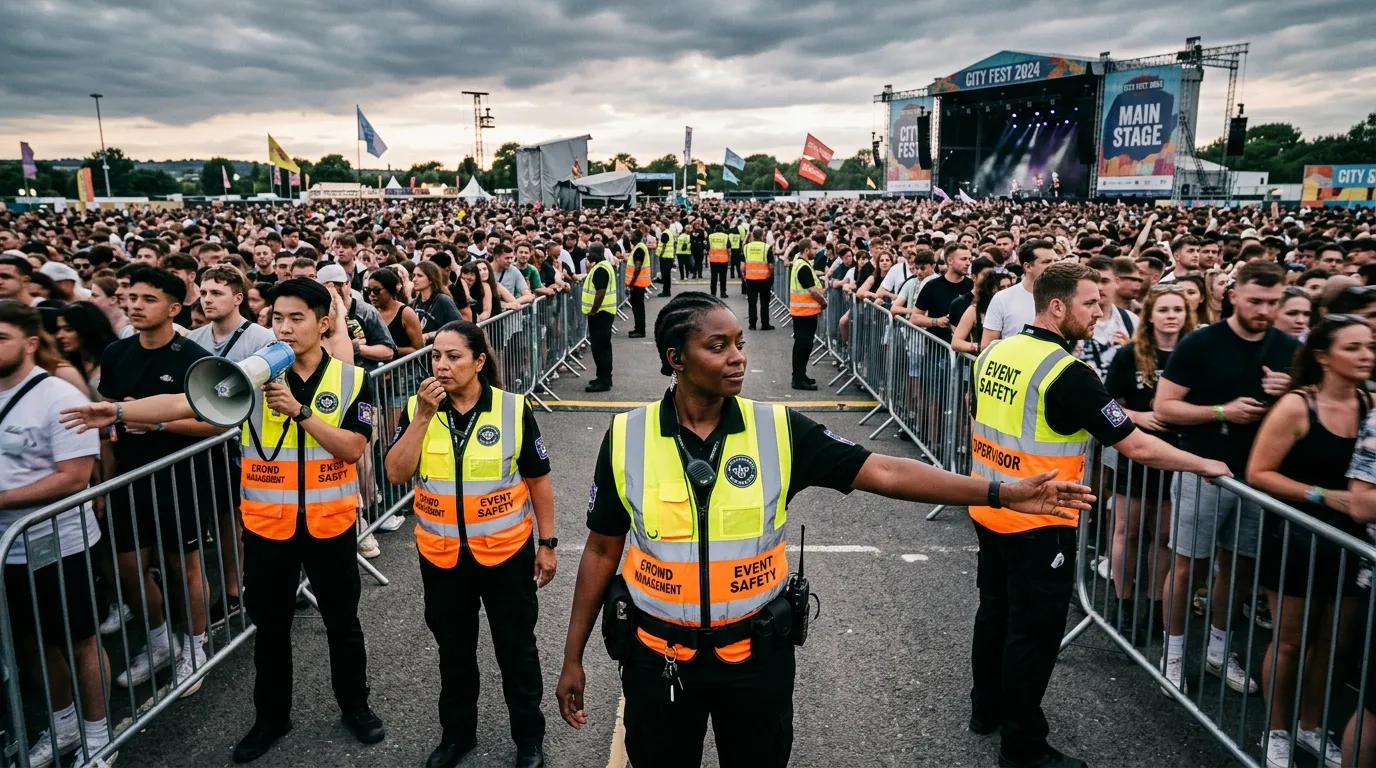
Your Ultimate Guide to Sourcing & Hiring Elite Crowd Management Personnel
Secure your events, ensure public safety, and build a reputation for flawless execution with professionally trained Crowd Management Personnel. Discover how to hire, train, and deploy the best talent today.
Hire Crowd Management Staff NowComprehensive Overview of Crowd Management Roles
Core Responsibilities of Crowd Management Personnel
Professional Crowd Management Personnel are the frontline guardians of public safety and event flow. Their duties extend far beyond simple supervision.
- Access Control & Queue Management: Efficiently processing attendees through entry points, managing lines to prevent congestion and frustration.
- Crowd Flow & Dynamic Risk Assessment: Continuously monitoring crowd density, movement patterns, and mood to pre-empt potential bottlenecks or safety issues.
- Emergency Response Coordination: Acting as first responders to incidents, guiding evacuations, administering first aid, and liaising with emergency services.
- Communication Hub: Using radios and clear verbal commands to maintain constant communication with team leads, security, and event organisers.
- Crowd Behaviour Management: De-escalating conflicts, addressing disruptive behaviour calmly and professionally, and enforcing event policies.
Key Benefits of Professional Crowd Management Staff
Enhanced Public Safety & Risk Mitigation
Trained personnel drastically reduce the risk of crowd-related incidents like crushes, stampedes, and conflicts. Their proactive monitoring identifies hazards before they escalate, protecting both attendees and your organisation's liability.
Improved Attendee Experience & Flow
Efficient queue management, clear directional guidance, and helpful interactions directly contribute to positive attendee sentiment. Smooth ingress and egress prevent frustration and ensure people can enjoy the event, boosting repeat business and reputation.
Operational Efficiency & Cost-Effectiveness
Professional crowd control streamlines operations, allowing other staff (catering, sales, etc.) to focus on their core duties. This optimises labour costs. For temporary or seasonal needs, leveraging a specialised temp workforce is often more economical than full-time hires.
Strategic Hiring & Deployment of Crowd Management Personnel
The Modern Hiring Process: Speed Meets Vetting
Finding reliable Crowd Management Personnel requires a balance of rapid deployment and thorough screening. In today's market, a protracted hiring process can mean missing out on top talent or being unprepared for an imminent event. A streamlined yet rigorous approach is key.
This involves verifying essential certifications (like SIA Door Supervisor licences in the UK), conducting comprehensive background checks, and assessing situational judgement through scenario-based interviews. Partnering with an agency that specialises in urgent temp hire can compress this timeline without compromising on quality, providing vetted personnel ready for an immediate start.
Pro-Tip: The 72-Hire Rule
For non-specialised crowd roles, aim to complete the sourcing-to-deployment cycle within 72 hours for last-minute events. This requires pre-vetted talent pools and digital onboarding—a core strength of modern staffing agencies.
Training & On-Site Protocols: Beyond the Basic Brief
Even experienced Crowd Management Personnel require event-specific training. A comprehensive brief should cover:
- Site-Specific Layout & Risk Zones: Detailed walkthroughs of entry/exit points, emergency assembly areas, medical posts, and identified congestion points.
- Communication Protocols & Chain of Command: Clear radio procedures, designated codes, and the precise reporting structure to event control, security leads, and client representatives.
- Scenario Drills: Practicing responses to medical emergencies, severe weather, evacuations, and crowd agitation builds muscle memory and team cohesion.
- Customer Service Ethos: Reinforcing that crowd management is a public-facing role; personnel should be helpful, polite, and informative, not just authoritarian.
Integrating these personnel with other temporary staff, such as those handling data entry back office executive tasks for attendee tracking or logistics, ensures a unified operational picture. Effective coordination is as crucial as the frontline management itself.
Technology & Crowd Management: The Data-Driven Frontier
Modern Crowd Management Personnel are increasingly supported by technology. Real-time data from ticket scanners, CCTV analytics (measuring density and flow), and mobile reporting apps empower supervisors to deploy staff dynamically to areas of need.
This data-centric approach mirrors efficiency drives in other sectors. Just as a catering staff calculator tool optimises labour for events, crowd analytics software optimises safety personnel placement. The personnel on the ground become the intelligent interface between the data and the human crowd, interpreting alerts and taking appropriate action.
Future-forward hiring should consider basic tech literacy as a valuable secondary skill for Crowd Management Personnel, allowing them to interact with these systems effectively.
Tech Tools for Managers
- Real-time Density Heatmaps
- Digital Incident Reporting Apps
- Integrated Radio & GPS Tracking
- AI-Powered Anomaly Detection
Your 3-Step Roadmap to Flawless Crowd Management Staffing
Strategic Assessment & Planning
Analyse your event's size, type, attendee profile, and specific risks. Determine the number and type of Crowd Management Personnel needed. Create a detailed deployment plan and communication matrix. This foundational step aligns with broader strategic recruitment principles.
Rapid, Vetted Sourcing
Leverage specialised agencies with pre-screened talent pools to source qualified personnel. Verify licences, experience, and soft skills. Aim for a streamlined process that allows for rapid hiring to meet tight deadlines without sacrificing vetting integrity.
Deployment & Real-Time Management
Conduct thorough event-specific briefings and site walkthroughs. Deploy personnel according to the plan, with clear supervisors and channels for real-time communication. Monitor the operation, adapt to changing conditions, and conduct a post-event debrief to capture lessons learned.
Frequently Asked Questions: Crowd Management Personnel
While both roles are vital for safety, their focus differs. Security Guards are primarily concerned with asset protection, loss prevention, and responding to specific criminal acts or breaches. Crowd Management Personnel focus on the holistic movement, behaviour, and safety of large groups of people. Their skillset is geared towards flow, communication, de-escalation within a crowd, and emergency evacuation guidance. A security guard protects a perimeter; crowd management personnel ensures safety within it.
For large-scale events (10,000+ attendees), you should initiate the booking process at least 8-12 weeks in advance. This allows time for detailed planning, sourcing the correct number of personnel, and conducting necessary briefings. For smaller events, a lead time of 4-6 weeks is advisable. However, quality agencies also cater to last-minute needs; for example, services similar to same-day event set-up crew placements can sometimes extend to crowd staff for urgent, smaller-scale requirements.
Their primary duty is always crowd safety. However, during quieter periods or at specific posts (like an information booth at an entrance), they may be tasked with simple directional queries or light administrative support. It's important not to overload them with secondary duties that could distract from their core safety function. For dedicated administrative support, such as a Data Entry Back Office Executive role to manage attendee lists or access logs, it is far more efficient to hire separate specialised staff. This ensures both crowd safety and data accuracy are handled by experts.
Demand is widespread. Retail sectors use them for major sales events and new store openings. Transport hubs (airports, stations) require constant passenger flow management. Construction sites need personnel to manage site access and worker movement. Tourist attractions and museums use them to manage queues and capacity. The skills are also transferable to managing orderly queues for services like health visitor clinics during high-demand periods or vaccination drives.
Ready to Secure Your Next Event with Expert Crowd Management Personnel?
Don't leave crowd safety and event success to chance. Access our nationwide network of vetted, professional Crowd Management Personnel available for immediate deployment or future planning.
Need other temporary staff? Explore our services for warehouse jobs, logistics, and IT & telecom staffing.
Case Study: Managing a High-Profile Stadium Concert
The Challenge & The Solution
A 60,000-capacity stadium was hosting a major international artist. The primary challenges were: managing the frenzied arrival of 15,000 general admission (standing) ticket holders to secure barrier positions, coordinating egress of the entire crowd post-show, and handling potential heat exhaustion during a summer heatwave. The event required a layered crowd management strategy.
A tiered personnel structure was deployed: Perimeter Teams managed outer queues and vehicle traffic. Ingress Marshals, trained in dynamic risk assessment, controlled the surge into the standing pen. Internal Zone Wardens were stationed within the crowd itself to monitor density and well-being, equipped with water and direct lines to medical teams. Egress Coordinators were positioned at all exits with clear signage and voice amplification to funnel attendees safely towards transport hubs.
The result was zero serious incidents, a 25% faster egress than the previous year's event, and overwhelmingly positive feedback on crowd handling from both attendees and local authorities. This demonstrates how strategic deployment, going beyond mere numbers of staff, is critical for success.
Key Takeaways from This Deployment
- Role Specialisation is Key: Not all crowd management personnel perform the same function. Defining clear sub-roles (Queue Management, Internal Monitoring, Emergency Response) increases efficiency.
- Integration with Other Services: The crowd team’s radios were on a shared channel with medical, security, and event control, enabling a unified response to any incident.
- Proactive Resource Provision: Anticipating the heat, zone wardens distributed water, preventing a surge of minor medical calls and improving crowd sentiment.
Navigating Legal Frameworks & Compliance
Hiring Crowd Management Personnel isn't just an operational decision; it's a legal imperative. Event organisers and site owners have a duty of care under health and safety legislation (such as the UK's Health and Safety at Work etc. Act 1974). Failure to provide adequate crowd management can lead to severe legal liability, fines, and reputational damage in the event of an incident.
Licensing & Certification Requirements
Requirements vary by region, but understanding them is non-negotiable for hiring managers.
- UK (SIA Licensing): While there is no specific"Crowd Controller" licence, personnel undertaking certain duties (especially where conflict may arise) often require an SIA Door Supervisor licence. It is illegal to employ unlicensed individuals for licensable activities.
- First Aid Certification: A minimum requirement for a significant portion of the team. A First Person on Scene (FPOS) or equivalent qualification is highly recommended for supervisors.
- Event-Specific Training: Certifications in areas like Dynamic Risk Assessment, Major Incident Management, or Stewarding at Large Events are strong indicators of a professional.
When you hire staff through a reputable agency, they handle this verification, providing an audit trail of compliance that protects your organisation.
The Role of Crowd Management Plans
A formal Crowd Management Plan (CMP) is a cornerstone of compliance and safety. It’s not just an internal document; it's often required by local authorities for event licensing. Your Crowd Management Personnel are the living, breathing execution arm of this plan.
A robust CMP should detail: calculated safe capacities for all areas, ingress/egress flow rates, locations of all crowd staff posts, triggers for implementing contingency measures (like closing entrances), and clear protocols for emergencies. The personnel must be thoroughly briefed on this plan. Their ability to adapt it in real-time—a skill honed through experience—is what transforms a static document into dynamic safety.
⚠️ Liability Warning: The"Gig Economy" Pitfall
There is a growing trend of sourcing individuals directly via online gig platforms for casual stewarding work. This carries significant hidden risks. Who verifies their certifications? Who provides the mandatory employer's liability insurance? Who ensures they are properly briefed and integrated into a command structure? In the event of an incident, the legal and financial liability will likely fall squarely on the event organiser. Partnering with a professional agency transfers this employment liability and ensures a managed, compliant service. This is as crucial as vetting the technical skills for a specialised power generation role.
The Art of De-escalation: Advanced Techniques for Personnel
While physical positioning and presence are part of crowd management, the most powerful tool is often communication. Elite Crowd Management Personnel are trained in verbal de-escalation and non-confrontational communication techniques that diffuse tension before it escalates into a security incident.
The"PEACE" Model for Crowd Interaction
Plan & Prepare
Anticipate potential flashpoints and have a communication strategy before engaging.
Engage & Explain
Initiate contact calmly. Explain policies clearly and the reasons behind them.
Active Listening
Listen to the attendee's frustration. Acknowledgement can often defuse anger.
Control & Choices
Maintain control of the interaction by offering limited, reasonable choices where possible.
End Positively
Aim to conclude the interaction with the attendee feeling heard and treated fairly.
Non-Verbal Communication & Positioning
What personnel don't say is as important as their words. Training covers critical non-verbal skills:
- Proxemics: Using personal space effectively. Standing too close can be provocative, while too far can seem disengaged.
- Stance & Gesture: An open, relaxed posture (uncrossed arms) appears less threatening. Deliberate, calm gestures aid communication.
- Team Positioning: During a potential conflict, teams use"supportive positioning" where one member takes the lead in communication while others observe from a tactically safe distance, ready to assist if needed without appearing to gang up on an individual.
This level of skilled communication is a hallmark of true professionals and is a key differentiator when sourcing talent. It requires training and the right temperament, similar to the customer-facing skills needed for hotel receptionist roles, but applied in a high-pressure, public safety context.