Does Amazon Hire Full Time Employees? A Comprehensive 2026 Guide to Amazon's Hiring Strategy
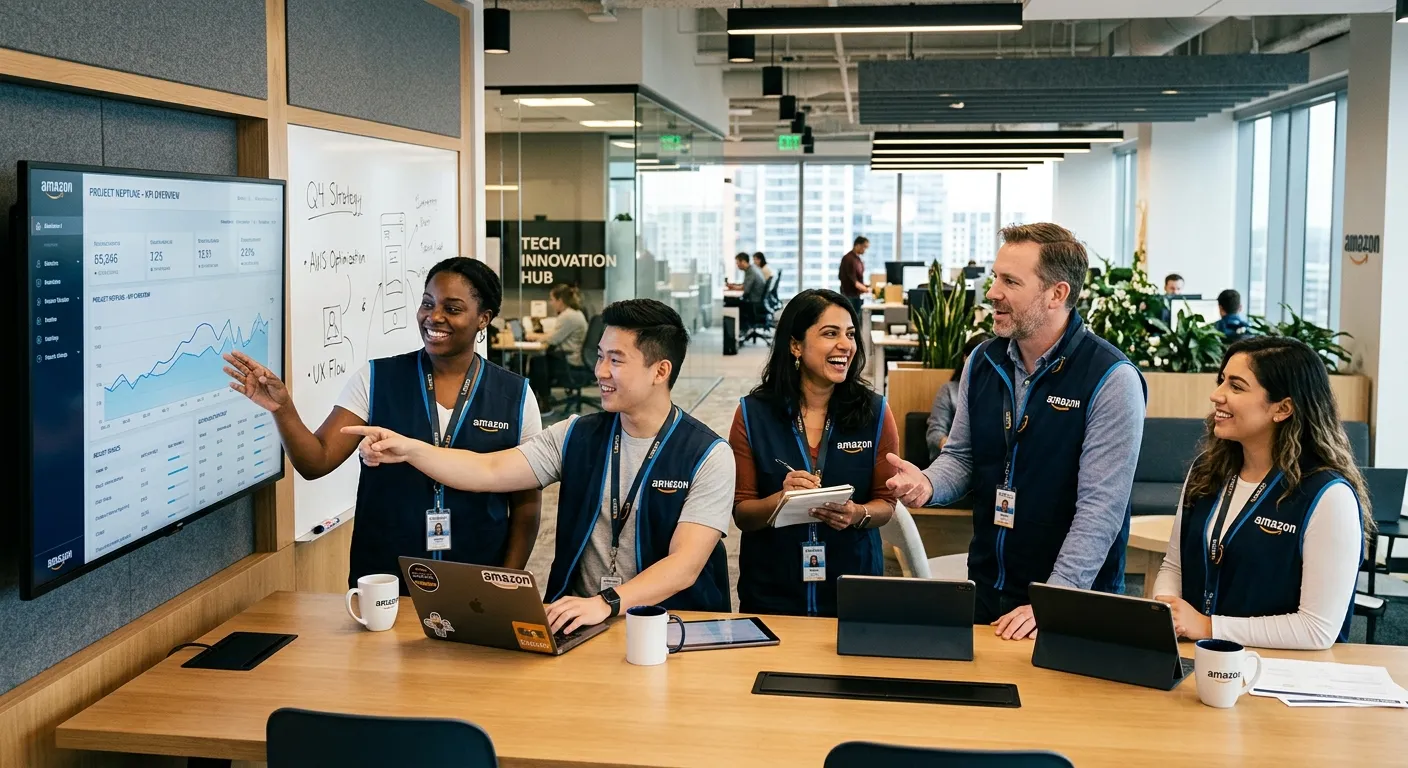
Uncover the truth behind Amazon's vast employment model, from corporate careers to warehouse operations, and learn how your business can adopt similar scalable hiring practices.
As one of the world's largest employers, Amazon's hiring practices are a subject of immense curiosity for both job seekers and business leaders. The question"Does Amazon Hire Full Time Employees" is more nuanced than a simple yes or no. Amazon's employment ecosystem is a complex blend of full-time, part-time, seasonal, and temporary roles, designed to scale with its unprecedented operational demands. This deep-dive analysis will explore Amazon's full-time hiring pathways, the benefits and challenges of their model, and provide actionable insights for businesses looking to build a resilient workforce. Whether you're a professional seeking a career at Amazon or a manager seeking strategic recruitment insights, this guide delivers the clarity you need.
Navigating Amazon's Employment Landscape
Amazon's hiring is segmented across diverse business units. Use the tabs below to explore the primary categories.
Full-Time Corporate & Technology Careers
Yes, Amazon is a major employer of full-time professionals in corporate offices globally. These roles are typically salaried, come with comprehensive benefits (including health insurance, stock options, and retirement plans), and are focused on areas like Software Development, Product Management, Marketing, Finance, and Human Resources. Hiring is rigorous, often involving multiple interviews and case studies, reflecting Amazon's Leadership Principles. For businesses, this highlights the importance of a structured, values-driven interview process to secure top-tier talent.
- Typical Roles: Software Development Engineer (SDE), Product Manager, Financial Analyst, HR Business Partner.
- Hiring Process: Often includes phone screens, virtual"Loop" interviews (4-7 interviews), and a bar-raiser interview.
- Business Insight: Investing in a robust employer brand and clear career progression is key to attracting similar high-caliber candidates, a strategy often supported by Recruitment Agencies For Business Development.
Pro-Tip for Employers
Amazon's hybrid model of core full-time staff supplemented by flexible temporary workers is a blueprint for modern workforce planning. If you're facing fluctuating demand, consider building a core team and using a reliable temp workforce for scalability. This approach minimizes the risk of over-hiring during quiet periods and under-staffing during peaks, protecting your bottom line.
Strategic Benefits of a Mixed Workforce Model
Understanding why a giant like Amazon blends full-time and flexible hiring reveals critical strategies for business resilience.
Operational Scalability
Amazon can seamlessly ramp up for events like Prime Day or the holiday season by leveraging temporary and seasonal workers, ensuring customer promise is met without overburdening permanent staff. This is a lesson for any retail, events, or logistics business facing predictable surges.
Talent Pipeline & Try-Before-You-Hire
Seasonal periods act as extended interviews. High-performing temporary workers are often offered full-time positions, reducing hiring risk. This"try-before-you-buy" approach is a gold standard for roles with high turnover, similar to strategies used for temporary jobs across sectors.
Cost Management & Flexibility
A mixed model provides financial agility. Fixed costs are tied to core full-time staff, while variable costs align with temporary labor, allowing for precise budget control during economic uncertainty. Tools like a staff calculator tool can help businesses model these costs effectively.
Master Modern Hiring: A Strategic Video Guide
Watch this expert breakdown to understand the timelines and strategies behind efficient recruitment, a must-watch for any business leader.
Adapting Amazon's Hiring Playbook for Your Business
You don't need to be a trillion-dollar company to benefit from these principles. Here’s how to implement a scalable, efficient hiring strategy.
1. Define Your Core vs. Flexible Roles
Audit your workforce. Which roles are mission-critical, requiring deep institutional knowledge and long-term commitment? These are your full-time"blue badges." Which roles have fluctuating demand or are project-based? These are prime candidates for temporary or contract staffing. For example, a hotel may need full-time receptionist staff but temporary banquet servers for events.
2. Build Partnerships with Agile Staffing Providers
Amazon works with many staffing agencies. For your business, a reliable agency partner is a force multiplier. They handle recruitment, vetting, payroll, and compliance for your flexible workforce, allowing you to focus on core operations. Look for agencies with expertise in your sector, whether that's for specialist AV techs or transport staff. These Recruitment Agencies For Business Development become strategic allies.
3. Create a Clear Conversion Pathway
Motivate your temporary staff by offering a visible and fair path to full-time employment. Define the performance metrics and timeframe for conversion. This not only improves temp performance but also turns your flexible pool into a proven talent pipeline, reducing external hiring costs and time-to-fill for permanent roles.
4. Leverage Technology for Speed
Amazon's hiring platform is massive and data-driven. While your scale is different, you can use modern ATS (Applicant Tracking Systems), video interviewing, and digital onboarding to speed up hiring. For urgent needs, partnering with an agency that offers last-minute placements can be the difference between operational success and failure.
Frequently Asked Questions
Quick answers to the most common questions about Amazon's hiring and workforce strategies.
Does Amazon primarily hire full-time employees or temporary workers?
Amazon utilizes a hybrid model. It maintains a large core of full-time employees for corporate, tech, and critical operations roles. However, to manage immense seasonal volatility (like holidays), it relies heavily on hiring temporary and seasonal workers, many of whom are later converted to full-time status based on performance and business need. This balanced approach is a key lesson in workforce planning.
What are the main benefits for a business in using a mixed full-time and temporary workforce?
The primary benefits are scalability, cost efficiency, and reduced hiring risk. You can scale your team up or down without the financial and legal complexities of hiring/firing permanent staff. It allows you to"test" workers before offering a permanent role, and it converts fixed labor costs into variable costs, protecting your margins. This is especially valuable in industries like retail, hospitality, and logistics.
How can Recruitment Agencies For Business Development help a company emulate this model?
Specialized recruitment agencies act as an extension of your HR team. They provide immediate access to pre-vetted talent pools for temporary, contract, and permanent roles. They manage the entire recruitment lifecycle for flexible staff, from sourcing to payroll. This allows your business to respond swiftly to opportunities or challenges—whether you need an automation engineer for a project or urgent temp staff in a new location. They provide the agility that modern business development demands.
Is the path from temporary to full-time employment common outside of Amazon?
Absolutely. This"temp-to-perm" model is a cornerstone of modern staffing strategy across industries. It allows both employer and employee to assess fit without long-term commitment. Sectors from healthcare (e.g., health visitor roles) to construction and office administration frequently use this approach. It reduces turnover by ensuring permanent hires are already acclimated to the company culture and role requirements.
Ready to Build Your Agile, Scalable Workforce?
Stop wondering"Does Amazon Hire Full Time Employees" and start implementing a hiring strategy that gives you the best of both worlds: a stable core team and instant access to flexible talent. Whether you need permanent specialists or temporary support to cover a surge, we have the solution.
Explore our employer resources or read client testimonials to see how we drive growth for businesses like yours.
Case Study: How a Mid-Sized E-Commerce Brand Scaled Like Amazon
To move from theory to practice, consider the journey of"UrbanGoods," a UK-based homeware retailer with 50 core employees. Facing 300% order volume increases during Black Friday and the December holidays, their permanent staff was chronically overwhelmed, leading to burnout, delayed shipments, and a dip in customer satisfaction scores below 85%. In 2025, they implemented a workforce strategy inspired by Amazon's hybrid model, partnering with a specialized staffing agency for logistics and customer service.
The Strategy & Implementation
UrbanGoods first conducted a role audit, identifying their core full-time functions (buying, marketing, IT, senior operations managers) and their flexible demand roles (warehouse pickers/packers, customer service agents, seasonal merchandisers). For the flexible roles, they established a standing agreement with an agency for a baseline of 20 temporary workers, with a clause to scale up to 80 within a 72-hour notice period during peak forecasts.
Crucially, they created a structured"Path to Blue Badge" program. Temporary workers who exceeded targets for two consecutive peak seasons and passed a cultural fit interview were guaranteed an interview for the next available full-time warehouse or customer service role. This program was marketed in onboarding, leading to a 40% increase in temp productivity and a 70% conversion success rate for those offered roles.
Quantifiable Results After 12 Months:
- Peak Season Capacity: Handled 320% order increase without hiring a single additional permanent FTE.
- Cost Efficiency: Reduced overall peak-season labor costs by 18% by minimizing overtime for core staff and optimizing temp shift patterns.
- Quality & Retention: Customer satisfaction (CSAT) rebounded to 96%. 60% of their current full-time operations staff originated from the temp-to-perm pipeline, showing higher 12-month retention than direct hires.
- Managerial Focus: Operations managers reported a 30% reduction in administrative hiring tasks, allowing them to focus on process improvement.
Decoding the"Blue Badge" Conversion: Metrics That Matter
While many businesses understand the concept of temp-to-perm, few define the clear, objective metrics that trigger conversion. Amazon's process, while internal, is known to focus on specific Key Performance Indicators (KPIs). Emulating this transparency is key to a fair and effective system.
| Role Category | Sample Conversion Metrics (90-Day Temp Period) | Business Benefit of Metric |
|---|---|---|
| Warehouse Associate | > 98% scan accuracy, < 1% absenteeism, meets/beaches target units per hour (UPH) in 8 of 10 weeks. | Ensures conversion candidates prioritize both speed and quality, reducing costly errors. |
| Customer Service Agent | > 90% customer satisfaction (post-call survey), < 5 min average handle time, zero compliance violations. | Identifies agents who balance efficiency with customer care and regulatory adherence. |
| Data Entry Clerk | > 99.5% data entry accuracy, completes 100% of assigned batches on time, demonstrates proficiency in 2+ software systems. | Highlights attention to detail, reliability, and adaptability to company tools. |
Implementing a scorecard like this, communicated at the start of a temporary assignment, aligns expectations and motivates performance. It transforms the conversion from a subjective managerial decision into an earned achievement. Businesses can leverage agency partners to track these metrics, much like how a temp workforce provider would offer performance analytics dashboards.
The Hidden Engine: Workforce Management Technology
Amazon's scalability is underpinned by a sophisticated suite of workforce management (WFM) tools that many SMEs overlook. Beyond the basic Applicant Tracking System (ATS), scalable hiring requires integration across platforms.
1. Integrated Vendor Management Systems (VMS)
For businesses using multiple staffing agencies, a VMS provides a single dashboard to request, approve, and manage all contingent workers. It streamlines billing, ensures rate consistency, and provides consolidated reporting on temp performance and spend—a non-negotiable tool for controlling costs when scaling a flexible workforce for projects like event AV support or warehouse surges.
2. Predictive Demand Forecasting
Advanced platforms now use AI to analyze sales data, website traffic, and even weather forecasts to predict labor needs weeks in advance. A restaurant group, for instance, could use this to schedule extra catering staff for a sunny weekend forecasted 10 days out, avoiding last-minute scrambles and premium pay rates.
The goal is a"just-in-time" talent pipeline. When these technologies are coupled with a trusted agency partner responsible for filling the forecasted roles, businesses achieve true operational agility. This is how companies seamlessly staff for last-minute placements without compromising on candidate quality.
Balancing Scalability with Ethics: The Employer Brand Imperative
A hybrid workforce model carries reputational risks if perceived as exploiting temporary labor. The key differentiator for businesses that succeed long-term is ensuring fairness and transparency for all workers, regardless of employment status.
Best Practices for Ethical Implementation:
- Parity in Working Conditions: Temporary staff should have access to the same basic amenities (break rooms, safety equipment) and should be integrated into team communications. Excluding them creates a two-tier system that harms morale.
- Clear, Communicated Pathways: As outlined earlier, the criteria for conversion to full-time must be transparent, achievable, and fairly administered. This turns a flexible role from a"dead-end" into a valued opportunity, much like respected temporary job programs in other sectors.
- Partner with Reputable Agencies: Your ethical standards extend to your partners. Choose staffing agencies known for fair wages, prompt payment, and treating workers with respect. This protects your brand from association with poor labor practices.
- Include Temps in Culture: Invite temporary employees to relevant team meetings and non-monetary recognition programs. A simple"Employee of the Month" award that includes temps can significantly boost engagement and performance.
Businesses that master this balance don't just build a scalable workforce; they build a reputation as a fair and desirable place to work. This enhances their ability to attract both the best permanent professionals and the highest-caliber temporary workers, creating a virtuous cycle of talent attraction and retention.