Disaster Recovery Staffing: Your Strategic Blueprint for Resilient Emergency Response
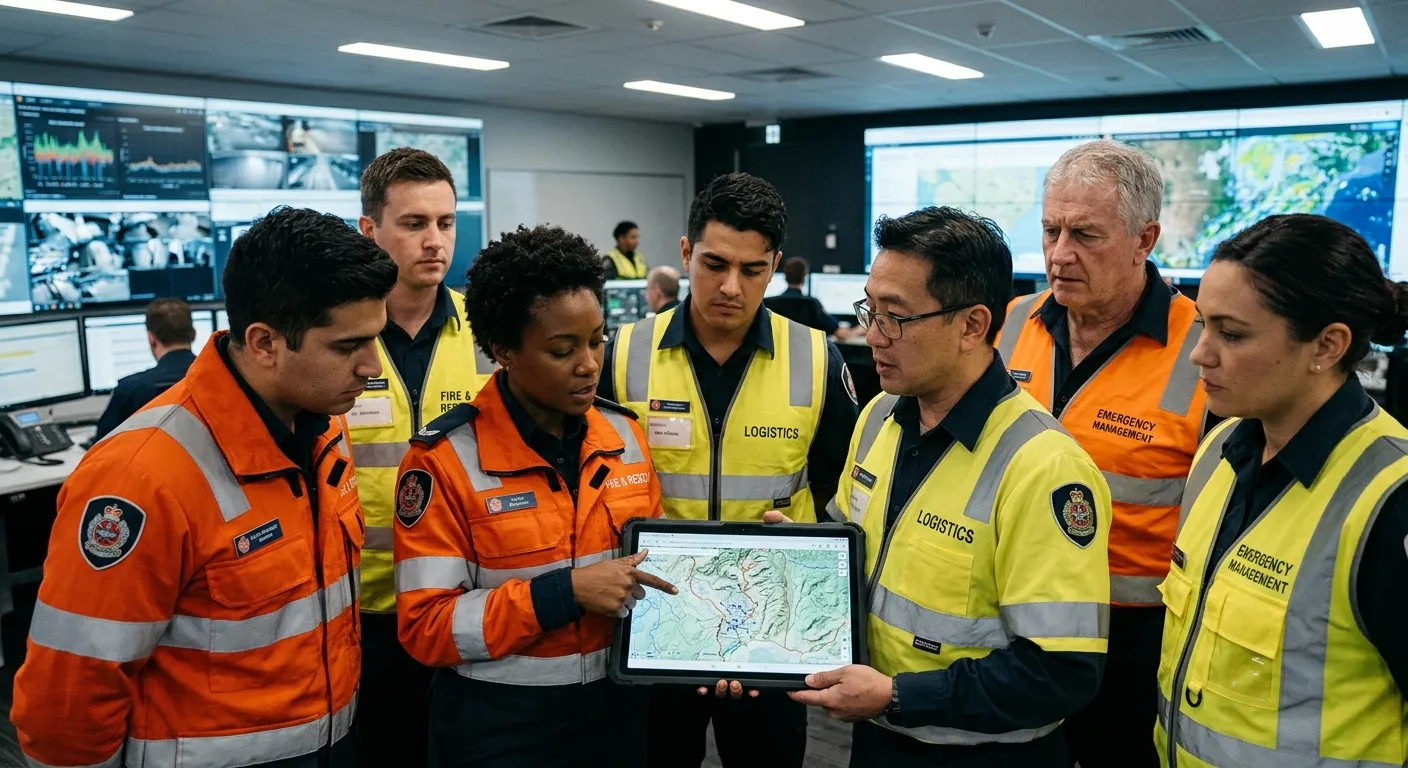
When critical infrastructure fails, supply chains break, or unforeseen crises strike, your operational continuity hinges on one decisive factor: having the right people deployed at the right time. Disaster Recovery Staffing is not merely a reactive measure—it’s a strategic imperative. This comprehensive guide explores how partnering with a specialised Emergency Staffing Agency UK can transform your resilience planning, mitigate downtime costs, and safeguard your reputation.
Secure Your Recovery Team NowThe Multi-Faceted World of Disaster Recovery Staffing
Effective disaster recovery requires a nuanced approach across different phases and scenarios. Understanding these categories is the first step in building a robust staffing plan.
Phase 1: Immediate Response & Incident Management
The first 24-72 hours are critical. This phase demands staff who can operate under pressure, make swift decisions, and execute containment protocols. Roles often include on-site incident commanders, health & safety officers, first aid responders, and logistics coordinators to secure assets and personnel. An Emergency Staffing Agency UK with a pool of vetted, on-call professionals can deploy these teams within hours, not days, turning a potential catastrophe into a managed incident.
Phase 2: Technical Restoration & Infrastructure Recovery
Once the immediate threat is contained, the focus shifts to restoring operational capacity. This requires highly skilled technical staff: IT systems engineers to recover data and networks, electricians and facilities engineers to repair physical infrastructure, and specialised light industrial staff for clean-up and repair operations. The complexity here demands pre-vetted talent with specific certifications, something a seasoned staffing partner provides seamlessly.
Phase 3: Business Continuity & Operational Scaling
Recovery isn't complete until normal business functions resume at full capacity. This phase may involve scaling up temporary teams to handle backlogs, such as deploying additional warehouse operatives to clear disrupted logistics, or bringing in administrative and customer service temp staff to manage increased client communications. Strategic Disaster Recovery Staffing plans for this ramp-up, ensuring you have access to a scalable temp workforce to bridge the gap until permanent operations stabilise.
Pro-Tip: The 72-Hour Rule
The most significant financial and reputational damage occurs in the first three days post-incident. Pre-negotiated service level agreements (SLAs) with a staffing agency guarantee that your recovery team is mobilised within this critical window, drastically reducing impact severity.
Core Benefits of Partnering with an Emergency Staffing Agency
Speed & 24/7 Availability
Disasters don't keep business hours. A dedicated agency provides a single point of contact with round-the-clock mobilisation, cutting through red tape to deploy staff from a pre-screened pool immediately. This mirrors the urgency seen in sectors like urgent AV tech roles where event failures demand instant response.
Access to Specialised, Vetted Talent
Recovery scenarios require niche skills—from certified electricians and data centre engineers to crisis communications experts. An agency’s existing network eliminates the lengthy sourcing and vetting process, providing qualified professionals like automation engineers or safety officers who are ready to work from day one.
Compliance & Risk Mitigation
The agency assumes responsibility for right-to-work checks, contract management, insurance, and payroll. This ensures all deployed staff are fully compliant with UK regulations, shielding your organisation from legal and financial risks during a vulnerable period, a principle that applies equally to logistics and construction recovery projects.
Building Your Disaster Recovery Staffing Plan: A Step-by-Step Guide
Step 1: Risk Assessment & Role Identification
Begin by mapping potential disaster scenarios specific to your industry and location—be it IT system failure, flood, supply chain rupture, or public health crises. For each scenario, identify the critical roles needed in the immediate, short-term, and medium-term recovery phases. For instance, a manufacturing plant might need immediate material handlers and safety officers, followed by machine technicians and quality inspectors. This process is akin to the strategic foresight outlined in our strategic recruitment blueprint for 2026.
Example Role Checklist:
- • Incident Manager / Site Controller
- • IT Disaster Recovery Specialist
- • Temporary Facilities & Maintenance Crew
- • Crisis Communications Coordinator
- • Logistics & Warehouse Support Staff
Step 2: Partner Selection & SLA Negotiation
Choosing the right Emergency Staffing Agency UK partner is paramount. Look for agencies with proven experience in your sector and a demonstrable track record of rapid deployment. Key negotiation points should include guaranteed response times (e.g., “first staff on-site within 4 hours”), clear pricing models for emergency call-outs, and the breadth of their talent network. Ensure they have the capability to scale, whether you need ten power generation technicians or fifty general labourers.
Critical Questions for Your Agency:
- ✓ What is your maximum mobilisation capacity within 12 hours?
- ✓ Can you provide verifiable references from past disaster recovery deployments?
- ✓ How do you ensure the ongoing compliance and certification of your temporary staff?
- ✓ What is your communication protocol during a large-scale, time-critical deployment?
Step 3: Plan Integration, Training & Simulation
Your disaster recovery staffing plan must be a living document, fully integrated with your overall Business Continuity Plan (BCP). Schedule regular table-top exercises and live simulations that include your staffing agency contact. This ensures both your internal teams and the external agency understand protocols, communication chains, and on-site integration procedures. Training temporary staff quickly is essential; leveraging agency resources for site-specific inductions can mirror successful models used for same-day event crews.
Simulation Exercise Example:
Scenario: Major IT outage affecting order fulfilment warehouse.
Staffing Activation Test: Agency tasked with deploying 15 temporary warehouse operatives and 2 IT support technicians to a secondary manual processing site within 6 hours. Measure performance against SLA and integration smoothness with permanent management.
Industry-Specific Disaster Recovery Staffing Insights
Healthcare & Social Care
Crises like pandemic surges or facility damage require rapid influx of clinical and support staff. An Emergency Staffing Agency UK with a specialist healthcare division can provide compliant nurses, care assistants, and porters, much like filling health visitor roles at short notice. The focus is on staff with up-to-date DBS checks and relevant NHS framework experience.
Logistics, Warehousing & Retail
Disruption here directly impacts revenue. Recovery staffing focuses on clearing backlogs, manual overrides for system failures, and temporary management. This could involve deploying teams similar to those for urgent transport roles to redirect goods, or large groups of pickers and packers to restore fulfilment speed, ensuring supply chain fluidity is regained swiftly.
Construction & Critical Infrastructure
Storm damage, utility failures, or construction site incidents demand certified, skilled labour at pace. Recovery staffing requires tradespeople—CSCS labourers, CPCS plant operators, electricians—who can perform safely in potentially hazardous post-disaster environments. Partnering with an agency that specialises in IT & Telecom and construction staffing ensures access to this certified talent pool immediately.
Corporate & IT Services
For cyber-attacks or data centre failures, recovery is highly technical. Staffing needs shift to cybersecurity incident responders, data recovery specialists, and temporary helpdesk staff to manage internal and external communications. The model parallels the urgent need for niche tech talent, a capability demonstrated by agencies operating in competitive markets like the top staffing companies in Germany.
Frequently Asked Questions on Disaster Recovery Staffing
Response times vary by agency and scale, but a specialist Emergency Staffing Agency UK should guarantee initial deployments within 2-6 hours for localised incidents, with larger-scale mobilisations (50+ staff) within 12-24 hours. This hinges on pre-agreed SLAs and the agency maintaining a robust, on-call talent pool. For context, similar speeds are achieved for immediate start jobs in Manchester and other major hubs.
While agency staff have an hourly premium, this must be weighed against the immense fixed costs of maintaining a full-time, idle recovery team. The agency model converts this into a variable, on-demand cost. More importantly, it mitigates the astronomical cost of extended downtime. A staffing partner also absorbs recruitment, payroll, and compliance overhead, providing financial predictability during a crisis. Our quote tool can help model these scenarios.
Absolutely. A core part of the pre-planning with your agency is defining clear lines of reporting, communication protocols, and on-site leadership. Temporary staff are briefed on your chain of command, safety procedures, and specific recovery objectives before deployment. Experienced agency workers, such as those placed in temporary jobs in Milton Keynes or complex logistics roles, are accustomed to integrating swiftly into new teams and operating under client supervision.
Reputable agencies employ multi-stage vetting: verified qualifications and certifications, comprehensive right-to-work checks, thorough reference validation, and often scenario-based interviews to assess problem-solving under pressure. Many also maintain a"trusted responder" network of proven professionals who are first-call for critical deployments. This rigorous process, similar to that used for client-facing hotel roles, ensures reliability.
Don't Wait for the Crisis to Plan Your Response
Proactive Disaster Recovery Staffing is a cornerstone of modern operational resilience. By establishing a partnership with a dedicated Emergency Staffing Agency UK today, you secure not just a provider, but a strategic extension of your team—ready to mobilise at a moment's notice to protect your people, assets, and bottom line.
Need immediate consultation? Visit our employer hub for more resources on building a resilient workforce.
Case Study Analysis: The Real-World Impact of Strategic Staffing
Theory meets practice in high-pressure scenarios. Examining real-world applications of disaster recovery staffing demonstrates its tangible value in mitigating loss and accelerating return to normalcy.
Regional Distribution Centre Flood Response
The Crisis: A weekend flash flood breached a major logistics hub in the Midlands, damaging 40% of stored inventory and crippling warehouse management systems (WMS). With 72-hour delivery SLAs to major retailers at risk, the client faced potential penalties exceeding £500k per day.
The Staffing Solution: The client’s pre-arranged Emergency Staffing Agency activated a three-phase plan within 90 minutes of notification. Phase 1 deployed 25 light industrial staff and 5 site safety officers by hour 4 for immediate water diversion and asset salvage. Phase 2, by hour 12, introduced 15 manual warehouse operatives and 3 IT field technicians to establish a parallel, manual picking operation in a dry section of the facility. Phase 3 provided ongoing temporary management to oversee the hybrid manual/WMS workflow for two weeks.
The Outcome: The facility maintained 60% operational capacity throughout the crisis. Critical retail orders were fulfilled manually, avoiding penalties. Full WMS functionality was restored in 7 days, with temporary staff scaling down smoothly. The total staffing cost was less than 15% of the potential daily penalty, representing a clear ROI on the preparedness partnership.
Data Centre Thermal Event & IT Failover
The Crisis: A cooling system failure at a co-location data centre in London caused a thermal runaway event, triggering automatic shutdowns for multiple clients’ primary servers. One financial services client faced a total interruption of their trading platform at market open.
The Staffing Solution: The client’s disaster recovery plan included a “hot” failover site, but required specialised personnel to execute it. Their staffing partner mobilised a team of 4 IT Disaster Recovery Specialists and 2 Data Centre Engineers within 2 hours. These technicians worked in tandem with the client’s internal network team to physically transfer and validate backup tapes, reconfigure network routing, and bring the failover environment online.
The Outcome: The trading platform was restored with 4 hours of downtime, versus a potential 24-48 hour outage if internal staff alone were tasked. The agency-provided engineers brought specific hardware certification and prior experience with the client’s legacy systems, knowledge that was critical to the rapid restore. This highlights the value of accessing niche, pre-vetted technical talent impossible to retain in-house full-time.
The Legal & Compliance Landscape for Emergency Staffing
Deploying personnel during a crisis does not absolve an organisation of its legal duties. Understanding the shared responsibilities between client and agency is crucial for risk-free recovery operations.
⚠️ Critical Compliance Pitfall to Avoid
A common mistake is assuming the staffing agency is solely responsible for site-specific safety. Legally, the client (as the site controller) holds the primary duty of care. Even in an emergency, a full, recorded site induction covering unique hazards (e.g., unstable structures, chemical spills, live electrical risks) is mandatory. Failing to provide this exposes the organisation to significant HSE prosecution and invalidates insurance. Your staffing partner should be able to facilitate fast-track inductions, but the content and delivery remain your responsibility.
Technology’s Role in Modern Disaster Recovery Staffing
The speed and precision of a modern staffing response are powered by dedicated platforms that move beyond traditional phone trees and spreadsheets.
Digital Mobilisation Platforms & Geo-Tracking
Leading agencies utilise proprietary platforms that function as a digital war room. Upon activation, the system can:
- • Auto-alert pre-qualified talent pools via SMS and app notifications based on role, location, and certification.
- • Track real-time acceptance and ETA of workers, providing a live dashboard view of mobilisation.
- • Push digital documentation (site maps, safety briefings) to staff en route, speeding up on-site integration.
- • Integrate with client comms (like Slack or Microsoft Teams channels) for seamless updates between agency, client command, and deployed teams.
This technology transforms a chaotic call-out into a coordinated, trackable logistics operation, similar to systems used for managing large-scale event staffing deployments.
Automated Compliance & Digital Onboarding
In a crisis, paper-based checks are a fatal bottleneck. Integrated systems now enable:
- • Blockchain-verified credentials: Immutable digital records of certifications that can be verified instantly.
- • Biometric site access: Temporary worker profiles integrated into client security systems for controlled access.
- • Digital sign-off: Workers electronically confirm receipt and understanding of risk assessments and method statements before entering the site.
This creates a complete, auditable digital trail for every deployed individual, satisfying regulatory requirements and providing invaluable data for post-incident reviews and plan refinement.
Beyond Recovery: The Long-Term Strategic Advantages
While the primary value of disaster recovery staffing is realised during a crisis, the partnership delivers ongoing strategic benefits that strengthen your organisation’s overall resilience and agility.
Enhanced Talent Intelligence & Market Insight
A specialist staffing partner operates at the nexus of workforce supply and demand across multiple sectors. This relationship provides you with passive intelligence on:
- → Regional skill shortages that could impact your recovery timelines.
- → Evolving certification requirements for safety-critical roles.
- → Wage rate trends for temporary labour, aiding in accurate disaster budget forecasting.
This insight allows you to adapt your recovery plans proactively, ensuring they remain viable in the current labour market.
A Foundation for Agile Operational Scaling
The processes, contracts, and communication channels established for disaster recovery create a ready-made framework for positive, planned scaling. This same mechanism can be leveraged for:
- → Sudden demand surges (e.g., a major unexpected order).
- → Cover for large-scale planned leave or training events.
- → Pilot projects or new site openings requiring flexible initial staffing.
Your"emergency" partner effectively becomes your on-demand strategic workforce partner, providing a competitive advantage in market responsiveness.
The Ultimate Test: Are You Prepared?
Consider this final checklist. If you cannot answer 'yes' to all points, your disaster recovery staffing plan has critical gaps.
- ✓ We have a signed agreement with a specialist agency that includes guaranteed response-time SLAs.
- ✓ Our recovery plan includes specific, scenario-based role lists with required certifications.
- ✓ Key internal stakeholders and the agency contact have conducted a joint simulation exercise in the last 12 months.
- ✓ Our finance department has pre-approved spending authority for emergency staffing mobilisation.
- ✓ We have a clear, documented process for site-specific safety induction of temporary recovery staff.
- ✓ Our plan accounts for the mental wellbeing and support of both permanent and temporary staff during a crisis event.