Hire a Disaster Recovery Senior Analyst: Your Strategic Guide to Resilient Talent Acquisition
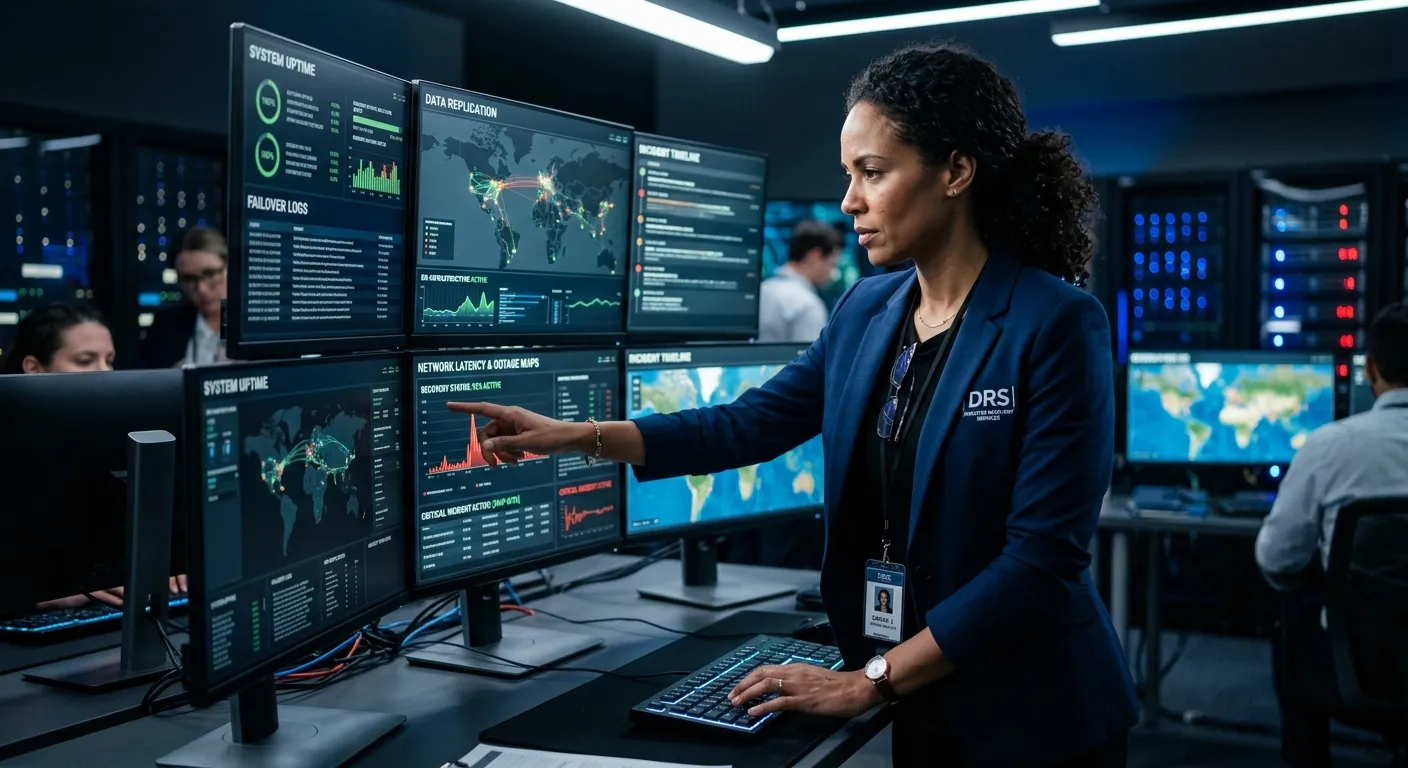
In an era of escalating cyber threats and operational disruptions, the role of a Disaster Recovery Senior Analyst has become mission-critical. This comprehensive guide delves into the strategic hiring, core responsibilities, and immense value a senior-level analyst brings to your organization's continuity. Whether you're looking to fortify your IT & Telecom division or need expert guidance on building a resilient team, this is your definitive resource.
Post a Job & Hire a Disaster Recovery Expert TodayMulti-Category Role Overview
The Strategic Imperative of the Role
A Disaster Recovery Senior Analyst is not just a technical responder; they are a strategic architect of organizational resilience. They own the lifecycle of disaster recovery (DR) and business continuity planning (BCP), transforming reactive protocols into proactive, tested frameworks. Their work ensures that in the face of a cyber-attack, system failure, or physical disaster, critical business functions can resume with minimal downtime and data loss. This role is increasingly vital within IT & Telecom sectors and any business reliant on digital infrastructure.
Pro-Tip: The best Senior Analysts think beyond IT. They align recovery objectives with core business goals, ensuring the sales team can still process orders and customer service can still answer queries, even during an outage. This holistic view is what separates a senior professional from a junior technician.
Their impact is measured in Risk Mitigated and Revenue Preserved. A single hour of downtime can cost enterprises hundreds of thousands. By crafting and validating robust recovery plans, the Senior Analyst directly safeguards the bottom line. For companies undergoing digital transformation or managing complex Logistics networks, this role is non-negotiable.
The Must-Have Skill Matrix
Hiring a top-tier Disaster Recovery Senior Analyst requires looking for a blend of deep technical knowledge, strategic project management, and soft skills. Here’s a breakdown of the essential competencies.
- Technical Mastery: Expertise in cloud recovery (AWS, Azure, GCP), virtualization (VMware, Hyper-V), database replication, and storage area networks (SAN). Understanding of cybersecurity principles to integrate DR with incident response.
- Process & Framework Expertise: Proven experience with standards like ISO 22301 (Business Continuity) and NIST SP 800-34. Ability to design, document, and maintain detailed Recovery Time Objective (RTO) and Recovery Point Objective (RPO) matrices.
- Leadership & Communication: Must lead tabletop exercises and full-scale drills, requiring clear communication to train staff and manage stakeholders from the C-suite to operations. This skill is as crucial as finding reliable Light Industrial Staff for a critical project—both require precise coordination.
- Analytical & Problem-Solving: Ability to conduct Business Impact Analyses (BIA), identify single points of failure, and design redundant, failover solutions.
Building a Winning Hiring Strategy
Securing a high-caliber Disaster Recovery Senior Analyst is a strategic project in itself. It requires moving beyond standard job boards. Consider a multi-channel approach: specialized IT recruitment agencies, professional network referrals (e.g., LinkedIn groups for BCP/DR), and showcasing your company’s commitment to resilience in your employer brand.
The interview process must be rigorous. Move beyond hypotheticals. Present candidates with a past incident scenario (anonymized) and ask them to walk through their assessment, plan activation, and communication strategy. Test their knowledge of your specific tech stack. Remember, a strategic hire here can prevent the need for Last-Minute Placements in a panic during an actual crisis.
Launch Your Search & Post a Job NowCore Benefits & Organizational Impact
Risk Reduction & Compliance
A Senior Analyst systematically identifies vulnerabilities, implements controls, and ensures plans meet regulatory standards (like GDPR, financial services mandates). This proactive shield mitigates legal, financial, and reputational risk, much like how a reliable staffing partner mitigates project risk by providing vetted Temp Workforce solutions.
Accelerated Recovery & Downtime Minimization
Through meticulous planning, automated runbooks, and regular testing, they slash recovery times from days to hours or minutes. This directly protects revenue and customer trust. The speed and efficiency required mirror the needs of sectors requiring Immediate Start Jobs to maintain operational tempo.
Strategic Leadership & Stakeholder Confidence
They translate technical recovery capabilities into business language for executives, boards, and investors. This fosters a culture of resilience and provides peace of mind, assuring stakeholders that the company is prepared. This strategic communication is as vital for internal confidence as a clear Strategic Recruitment Blueprint is for scaling a business.
The Modern Landscape: Cloud, AI, and Integrated Threats
The role of the Disaster Recovery Senior Analyst is evolving rapidly. The shift to hybrid and multi-cloud environments has transformed recovery architectures. Analysts must now be proficient in cloud-native disaster recovery services (like AWS DRaaS, Azure Site Recovery) and understand the shared responsibility model.
Furthermore, the rise of AI and machine learning presents both a threat and a tool. Senior Analysts must plan for AI-powered cyber-attacks while also leveraging AI for predictive analytics—identifying potential failure patterns before they cause an outage. This technical evolution requires continuous learning, similar to how Top Staffing Companies globally must adapt to new labour market technologies.
An often-overlooked parallel is physical event security and Crowd Management Companies Uk. Just as these companies plan for contingencies at large events—managing flow, security, and emergency responses—a Disaster Recovery Senior Analyst plans for digital contingencies, ensuring data and application"crowds" (user traffic) are safely redirected and managed during an incident.
Key Trends Shaping 2026 & Beyond
- Ransomware-Centric Planning: DR plans are now specifically tailored to recover from ransomware encryption, often involving immutable backups and air-gapped systems.
- DR as Code (DRaC): Infrastructure-as-Code principles applied to recovery, enabling faster, consistent, and version-controlled failover environments.
- Integration with DevOps (DevSecOps): Recovery testing is baked into the CI/CD pipeline, ensuring new applications are"born recoverable."
Your 3-Step Hiring Roadmap
Define & Scoping
Conduct an internal assessment. What are your critical applications? What are your current RTO/RPO gaps? Define if you need a permanent hire, a contract expert for a project, or interim coverage. This clarity is as important as defining needs for Warehouse Jobs in Edinburgh—specificity attracts the right talent.
Source & Engage
Utilize specialized channels. Craft a compelling job description that speaks to strategic impact, not just technical duties. Engage with candidates using scenario-based discussions. Leverage a recruitment partner with expertise in niche IT roles to access passive talent pools, much like you would for Hiring an Automation Engineer.
Onboard & Integrate
A successful hire is not complete at offer acceptance. Provide deep access to existing documentation, systems, and key stakeholders. Set clear 30/60/90-day goals that align with maturing your DR program. Effective integration ensures rapid value, turning a new Disaster Recovery Senior Analyst into a strategic asset, just as smooth onboarding is key for Temporary Jobs in Milton Keynes to be productive from day one.
Frequently Asked Questions
The key difference lies in strategic ownership and influence. A Senior Analyst typically owns the entire DR/BCP program lifecycle: they design the strategy, secure budget and executive buy-in, lead cross-departmental exercises, and are accountable for its success. They mentor junior analysts and interface directly with C-level stakeholders. An Analyst often focuses on the technical execution of plans, documentation maintenance, and monitoring under the guidance of the senior professional.
While seemingly different domains, both roles are rooted in contingency planning and risk mitigation for critical assets (data vs. people). A Disaster Recovery Senior Analyst plans for digital system failures; a crowd management company plans for physical venue emergencies. In large organizations, these plans may intersect. For example, if a company's HQ (a physical asset managed by crowd/security plans) houses its primary data center (a digital asset), the Senior Analyst must coordinate recovery site activation with facilities and security teams, who may engage specialized Crowd Management Companies Uk for large-scale site evacuations or lockdowns during an incident affecting both people and systems.
This depends on your needs. A permanent hire is ideal for building long-term institutional knowledge, ongoing program maturity, and fostering a culture of resilience. A contractor or temporary expert is perfect for a specific project (e.g., designing a new DR plan for a cloud migration, conducting a full-scale audit and test, or providing interim coverage while searching for a permanent head). This flexible approach is a cornerstone of modern Employer strategies, allowing you to scale expertise precisely when needed.
Compensation varies by location, industry (finance and tech typically pay more), and specific experience. As of 2026, in the UK, a Disaster Recovery Senior Analyst can command an annual salary ranging from £65,000 to £95,000+, with higher figures in London and for roles with cloud security specializations. Contract day rates can range from £450 to £750. It's crucial to benchmark against similar specialist IT roles to remain competitive. For insights on structuring attractive offers, reviewing resources like our guide on Rapid Hiring & Career Growth can provide valuable context.
Secure Your Organization's Future Today
Don't wait for a disaster to reveal your recovery gaps. Proactively hiring a Disaster Recovery Senior Analyst is one of the most strategic investments you can make in operational resilience and long-term business continuity.
Ready to build a resilient team? Explore our broader Hire Staff solutions or learn more About Us and our expertise in connecting businesses with critical talent.
Case Study: From Reactive Chaos to Proactive Control
Consider a mid-sized FinTech company that experienced a severe ransomware attack. Their IT team was technically proficient but lacked a dedicated Disaster Recovery Senior Analyst. The response was chaotic: critical payment processing systems were down for 72 hours, recovery steps were ad-hoc, communication with customers and regulators was delayed, and the final cost—including ransom, lost revenue, and regulatory fines—exceeded £500,000. The post-mortem revealed a stark truth: they had data backups, but no tested, actionable plan to restore business functions swiftly.
The Transformation
Six months later, after hiring a Senior Analyst, the same company faced a major data center power failure. The difference was night and day. The analyst had implemented a structured DR plan with clear RTO/RPO targets, automated failover scripts for core applications, and a pre-defined communication cascade. Key systems were restored in under 4 hours. The Senior Analyst led the command center, coordinating the technical team while providing real-time updates to the CEO and Board. The estimated cost of the incident was reduced by over 90%, and customer trust was maintained.
This case underscores the tangible ROI of the role. The analyst didn't just manage technology; they orchestrated a business response that protected revenue, reputation, and regulatory standing. Their work involved close collaboration with external legal counsel and communications firms, showcasing the role's cross-functional nature.
Beyond IT: The Cross-Functional Symphony
A common misconception is that disaster recovery is solely an IT function. A Senior Analyst acts as a central node in a complex web of departments. Their success hinges on seamless integration with other business units, each with its own continuity needs.
Legal & Compliance Integration
They work with legal teams to ensure DR plans satisfy data protection laws (e.g., GDPR mandates for data availability and integrity). In a breach, they provide the technical timeline and recovery evidence required for regulatory reporting. This partnership is critical to avoid compounding a technical incident with a legal one.
Human Resources & Facilities
Recovery plans must account for people and places. The analyst coordinates with HR on staff relocation plans, emergency communications, and alternate working arrangements. They liaise with facilities management for physical access to recovery sites, power, and environmental controls, creating a direct link to the principles of physical event management often handled by specialist Crowd Management Companies Uk.
This cross-functional mandate means the ideal candidate possesses not only technical acumen but also high emotional intelligence and diplomacy. They must translate"tech speak" into business impact for legal, and operational logistics for facilities, ensuring a unified organizational response.
Measuring Success: KPIs for the Disaster Recovery Senior Analyst
To justify the investment and steer the role effectively, organizations must establish clear Key Performance Indicators (KPIs). These move beyond"system restored" to measure the health and effectiveness of the entire resilience program.
| KPI Category | Specific Metric | Target & Impact |
|---|---|---|
| Program Maturity | Percentage of critical business processes with documented, tested recovery plans. | Target: 100%. Directly correlates with reduced operational risk. |
| Exercise Efficacy | Number of tabletop and full-scale drills conducted per year; success rate measured by RTO/RPO achievement. | Target: 2+ major drills. Ensures plans are actionable and staff are trained. |
| Recovery Performance | Actual vs. Planned Recovery Time (RT) in incident post-mortems. | Target: Meet or beat planned RT. Quantifies the analyst's direct impact on minimizing downtime cost. |
| Stakeholder Confidence | Survey results from executive leadership and board on perceived resilience readiness. | Target: High/Improving scores. Measures the intangible value of trust and strategic assurance. |
Regularly reviewing these KPIs with the Senior Analyst turns the DR program from a static document into a dynamic, continuously improving business process. This data-driven approach also provides concrete evidence for future budget requests and resource allocation.
The Future-Proof Investment
In a landscape of hybrid work, sophisticated cyber threats, and relentless digital transformation, the Disaster Recovery Senior Analyst role is evolving from a technical specialty into a core strategic function. The additional insights provided here—real-world case studies, cross-functional integration, and measurable KPIs—highlight the profound breadth of this position.
Hiring for this role is an investment in organizational agility and longevity. It signals to your market, your customers, and your employees that resilience is not an afterthought, but a cornerstone of your operational philosophy. By taking a comprehensive, strategic approach to this hire, you secure more than just a technician; you onboard a guardian of your business continuity and a key architect of your future success.